
Heart Leaf Tropicals
Giant Australian Prickly Stick Insect - Extatosoma Tiaratum
Giant Australian Prickly Stick Insect - Extatosoma Tiaratum
Couldn't load pickup availability
About the Species
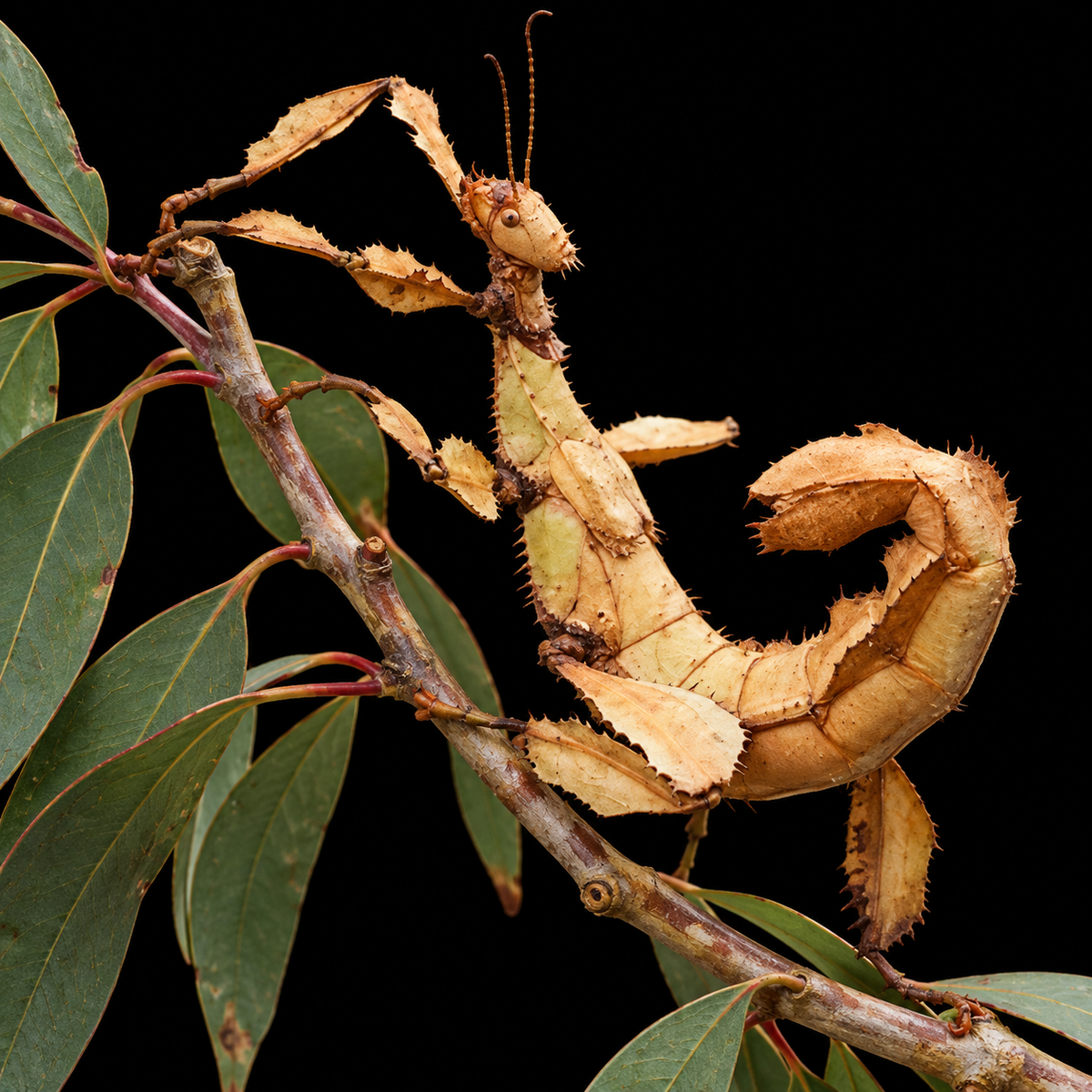
Extatosoma tiaratum, commonly called the Australian Stick Insect, Giant Prickly Stick Insect, Macleay’s Spectre, are a large, unusual stick insect native to Australia. Their curled abdomen, spiny body, and defensive posture can make them resemble a scorpion, while their coloration and texture provide excellent camouflage among dried leaves and branches.
They are generally calm and slow-moving and are one of the more impressive stick insects to keep. When disturbed by wind or misting, they may gently rock back and forth to imitate leaves moving in the breeze.
Housing
A tall, well-ventilated enclosure is essential. Screen enclosures work especially well because they provide excellent ventilation and plenty of surfaces for climbing and molting.
Provide branches and fresh food plants throughout the enclosure. Keep stems in water to maintain freshness, but completely cover the water opening so insects cannot fall in and drown.
Maintain temperatures around 70–77°F. Most importantly, provide enough vertical space for the insect to hang freely during molts.
Food
Australian Stick Insects are herbivores that feed on fresh leaves. Suitable foods include:
Eucalyptus, Guava, Blackberry/bramble, Raspberry, Rose, Oak, Salal, St. Johns Wort
Mature, dark-green leaves are preferred. Avoid very young blackberry growth for small nymphs. Never use plants that may have been treated with pesticides, including most florist roses. Pesticide residues cannot necessarily be made safe simply by washing the leaves.
Water & Humidity
Lightly mist the enclosure regularly to provide drinking droplets and appropriate humidity. Most of their hydration comes from the leaves they eat.
Good ventilation is important. The enclosure should be humid enough to support successful molts without remaining constantly wet.
Reproduction
Females can reproduce without males through parthenogenesis, producing viable eggs without mating. Fertilized eggs generally hatch faster than eggs produced parthenogenetically.
Females scatter their small, round eggs across the enclosure rather than burying them. Eggs can be collected and incubated on slightly moist coco fiber or sphagnum moss with good ventilation. Keep them humid but never waterlogged or moldy.
Handling
These insects are generally calm and can be handled gently. Never pull one from a branch or screen, as their legs can be injured.
Instead, place your hand in front of the insect and gently encourage it to walk onto you. They naturally prefer to climb upward and will often calmly walk across your hands and arms.
Interesting Fact
Their newly hatched nymphs are remarkable ant mimics. In the wild, their eggs may be carried underground by ants. After hatching, the tiny nymphs resemble ants in both appearance and movement, helping them escape the nest. As they grow and molt, they develop their characteristic leaf-like appearance.
Overall Care Level: Easy–Moderate
Diet: Herbivore
Temperature: 70–77°F
Ventilation: High
Temperament: Calm and handleable
Share